How Does a Electrical Switch Work?

Have you always wondered how blinking lights and a jumble of cables on someone’s desk or in a studio might be a musical instrument? Most likely, this equipment is a modular synthesiser, which is one of the most versatile and inspiring electronic instruments available. Modular synthesisers are an excellent tool for music and sound design; some musicians can create full albums or soundtracks with only a synth and no DAW!

What is Modular Switch and how does it work?

Interconnectivity is one of the fundamental concepts driving modular synthesis. Modular instruments, unlike classic synthesisers, are made up of numerous separate interchangeable elements known as modules. In some ways, modular synthesisers are more straightforward to comprehend than non-modular synthesisers, at least on a fundamental level.

Each synth component may be visually and physically divided into various modules, each of which serves a distinct purpose. Though there are a few “do it all” modules on the market, most modules fall into one of several categories.

Explanation of Modular Switch by Vensor

Control voltage is used to run analogue modules, as previously stated. The control voltage fluctuates when keys are pressed if a patch cable is connected from the CV output of a keyboard or sequencer to the CV input of a VCO (oscillator). This allows the receiving VCO to alter pitch at the same time.

The sequencer, which regulates the VCO with predetermined rhythmic patterns, would accomplish the same. However, there are two sorts of control voltages that behave differently. These voltages are known as “gate” and “trigger” voltages. Rather than causing continuous parameter changes, these control voltages are utilised to switch select occurrences.

A gate signal controls the length of time that an event lasts. The length of time you press a key on your keyboard, for example, will change a parameter.

Conclusion:

If you’re just getting started with modular, it can be frightening, and even if you’ve got a few modules under your belt, it can still be intimidating.When it comes to getting your hands on high-quality modular switches, one can surely rely on Vensor for the same.

What Are The Functions Of Mcb?

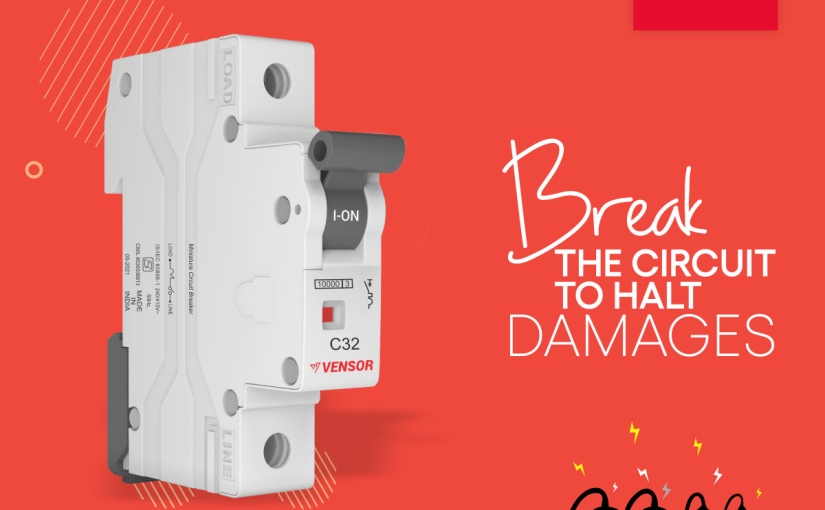
Addressing the first things first –what is a miniature circuit breaker? It is an automatically operated electrical switch. Miniature circuit breakers are used to prevent damage to an electrical circuit resulting from an excess flow of current. They are designed in such a way that they trip during an overload or short circuit. This is how they protect against unforeseen electrical faults and equipment failure.

MCBs are used widely as isolating components in residential, commercial, and industrial settings. They are a part of a broader family of even more powerful circuit-breaking components.

In simple words, the primary use of a miniature circuit-breaker is to protect an installation or appliance from getting damaged against sustained overloading and short-circuit faults. However, it will also protect against earth faults. 

MCB or electrical fuses? Which one to choose?

MCBs serve a similar function to electrical fuses, which are designed to melt in case of flow of excess current. Thus, by melting, electrical fuses break a circuit in case the current flowing through them is more than a pre-designated limit. Yet, fuses can be a little less reliable than MCBs. MCBs work better even in lower voltage settings without any requirement for replacement after use.

So, unlike electrical fuses, MCB is designed to protect against both overloading and short-circuiting. These are detected using different processes. The bimetallic strip provides overload protection by using thermal operation, while short-circuit protection is ensured by the tripping coil using electromagnetic operation. 

What are the functions of the circuit breaker?

The basic function of MCB is to detect faults and glitches by interrupting the current flow so that to immediately stop the electrical flow.

The breaker monitors the circuit and in the case of a complication such as an overload, the breaker immediately shuts off that circuit. Thus large-scale damage is thus prevented.

Vensor, an electrical company, deals in MCB, Modular switches, and electrical fuses. Bring home the best MCBs to ensure reliable protection from large-scale damage.

Source

How Does a Modular Switch Work?

Without a doubt, one can say that modular switches are at par with the typical controllers in most households. The recent variety of electrical switches are pretty convenient and easy to use. Above all, modern electrical switches serve various purposes. There are some great reasons why you have modular switches at home:

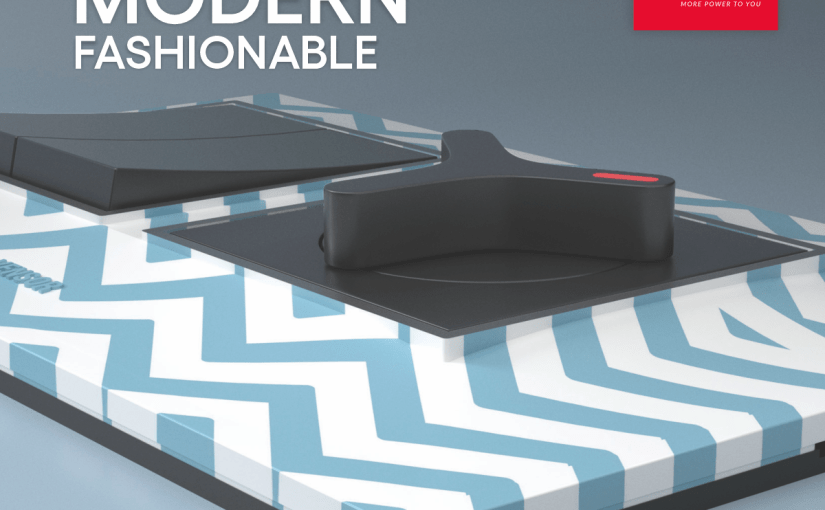
Simple Design- One of the best parts about modular switches is that it features an elegant design. Even though they are stylish, but the appealing shades tend to complement your home’s and office interiors. The versatile design makes it ideal for all formats, and people can choose it without a doubt. If you are building a new home, then you should go for modular switches featuring glass plates.

Safe to Operate-Safety is one of the main grounds why you should go for modular switches, and the conventional switches were once exposed to metal screws and wiring, which had a chance to cause a mishap. On the flip side, modular switches are free from all metallic parts appearing on the switchboard. Furthermore, these switchboards ensure there is no risk of electrical shock, and it is a significant relief for the ones who have young kids around. The switches are made from the best quality material, and there is no metal part on the front. Furthermore, the switchboards are shuttered that means children wouldn’t get hurt even accidentally.

Several Functions-The modular switches are mainly used for various applications, including security and automation. The best part is that switches can be installed in multiple aspects of the building to serve the multipurpose application. But the primary function of some modular switches is to carry heavy-duty applications. Above all, switches are pretty flexible as they can be installed and removed seamlessly.

Once you know that modular switches are perfect, you can install them without a doubt. Also, an important point to note is that, when going for modular switches, make sure to buy it from a reliable source such as Vensor. You can get a huge variety of modular switches here at affordable prices.

Source

What are the Facts about LEDs ?

An LED is a light-emitting diode, a  semiconductor appliance that brings bright light when exposed to a high voltage electric current. LEDs are used as a power lamp in many electronic devices, as rear-window and brake lights in automobiles, and as alphanumeric displays or even full-color posters on billboards and signs. Infrared LEDs are used as light sources in fiber-optic telecommunication systems, as well as autofocus cameras and television remote controls.

Today most energy-efficient and rapidly developing lighting technology is the light-emitting diode (LED). Quality LED light bulbs to outlast other types of lighting, are more durable, and provide comparable or better light quality. To learn more, read the top facts you didn’t know about LEDs.

How LED work

The lightbulb emits light via incandescence, a phenomenon in which an electric current heats a wire filament, causing the wire to emit photons, the basic energy packets of light. LEDs work through electroluminescence, a phenomenon in which photons are emitted as a result of the electronic excitation of a material.

LED Lighting Products

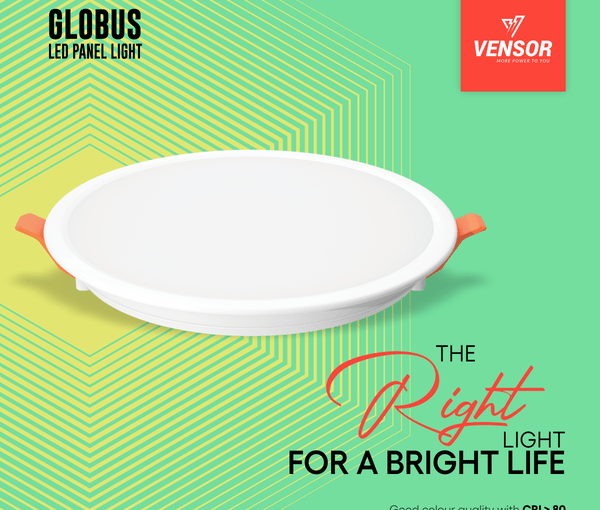
LED lighting is now accessible in a broad expanse of home and industrial products, and the catalog is broadening at all periods. LED technology’s rapid advancement has resulted in increased product availability, improved manufacturing efficiency, and lower prices.

 As a pioneer in the LED revolution in India, Vensor is always anxious to ascertain a channel exclusively for our premium LED products. We now have committed areas where our entire LED range, including popular bestsellers, specialty products, and recent innovations, will be set for the public. Our top-quality LEDs are made with premium quality material at the best and reasonable price.

Let us come together to witness the future of light!

Amazing Facts About MCB

Everyone is aware of the fact that a potentially high current load damages electric equipment or can cause severe hazards like fire! A fuse or MCB is necessary to protect these electronic products against overload. For instance, if an electrical system is overloaded, a fuse or MCB interrupts the electrical flow by cutting the circuit.

A miniature circuit breaker is often known as (MCB) is an electronic switch that halters the electrical circuit off automatically when the electrical circuit is in an unusual condition.

Nowadays, instead of using a fuse, we use the MCB in a low voltage grid. The fuse cannot feel that but it can be done more reliably by the miniature circuit breaker. MCB is considerably more sensitive than a fuse to overcurrent.

You need to take a couple of things into account before you make a note on MCB:

  • The MCB is more sensitive and can detect malfunctions in the current flow, turn switches off automatically and disconnect the connection from the power supply.
  • MCB can quickly identify the defective areas of the electrical circuit. In the fuse, the wire should be checked, on the other make, to confirm the defective area, by opening the fuse grip.
  • In addition, resuming the supply is very easy with MCB. You just have to tighten the knob. However, the whole wire must be replaced for the fuse.
  • MCB is reusable; therefore, maintenance and substitution costs are lower.
  • For MCBs the maximum rating current is 125A for separate magnetic sensitivities.
  • C32, and a specific equipment requirement is indicated by a 32A circuit breaker with a C-type sensitivity.
  • The minimum convention time depends on the circuit breaker’s mechanical engineering, which always takes some minimum time.
  • With the electricity heating action, the bi-metal band curves and breaks the connection of the circuit. A solenoid designed to respond to bigger currents complements the entire method.

MCB is better than fuse always. It provides low maintenance costs, and without professional knowledge and skills, one can easily manage and manage the switch.

Get your MCB by Vensor and keep your electronic devices safe.

Benefits of LED bulbs- Why to choose an LED bulb?

LEDs have skimmed the traditional lighting product marketbecause of many reasons most importantly their extensivelifespan, lessenedpower consumption, and lesscare needed. As the purchase price of lights and appliancesproceeds to fall, more and more upgradesfor lighting systems with LEDsare considered, given their numerousadvantages compared to traditional methods.

Energy conservation

LED lights use roughly 50% less power than the traditionallighting, fluorescent, and halogen options giving rise to crucial energy cost savings, especially in areas where lights are left on for expanded periods of time. LEDs also direct light in a particular direction, as opposed to traditional bulbs, which emit light in all directions. This directional lighting capability decreasespower and energy waste.

Durability 

As they do not possess filaments and glass compartments, LEDs are breakage reluctant and primarilyresistant to, vibrations and other concussions. Old lighting was usually encompassed in a glass or quartz covering, which can be morevulnerable to damage. LEDs, on the other hand, do notutilize any glass, instead they are ascended on a circuit board and pertained with soldered leads that can be susceptible to direct impact, but not more than normal electronic devices.

Instant-on 

Almost all fluorescent and lamps do not furnish full illuminationwhen they are switched on, with many bulbs requiring 3 minutes or more to reach maximum light output. LEDs come on at 100% brightness almost instantly with low striking delays.

Lifetime extension

LEDs, unlike incandescent lighting, do not fail when burned for longer time; they simply dim over time. Good quality LED’s have a life period of thirty to fifty thousand hours, or even lengthy, relying on the lamp or fixture. A typical bulb has a lifespan of about one thousand hours, whereas a comparable to a LED.